Initial Situation
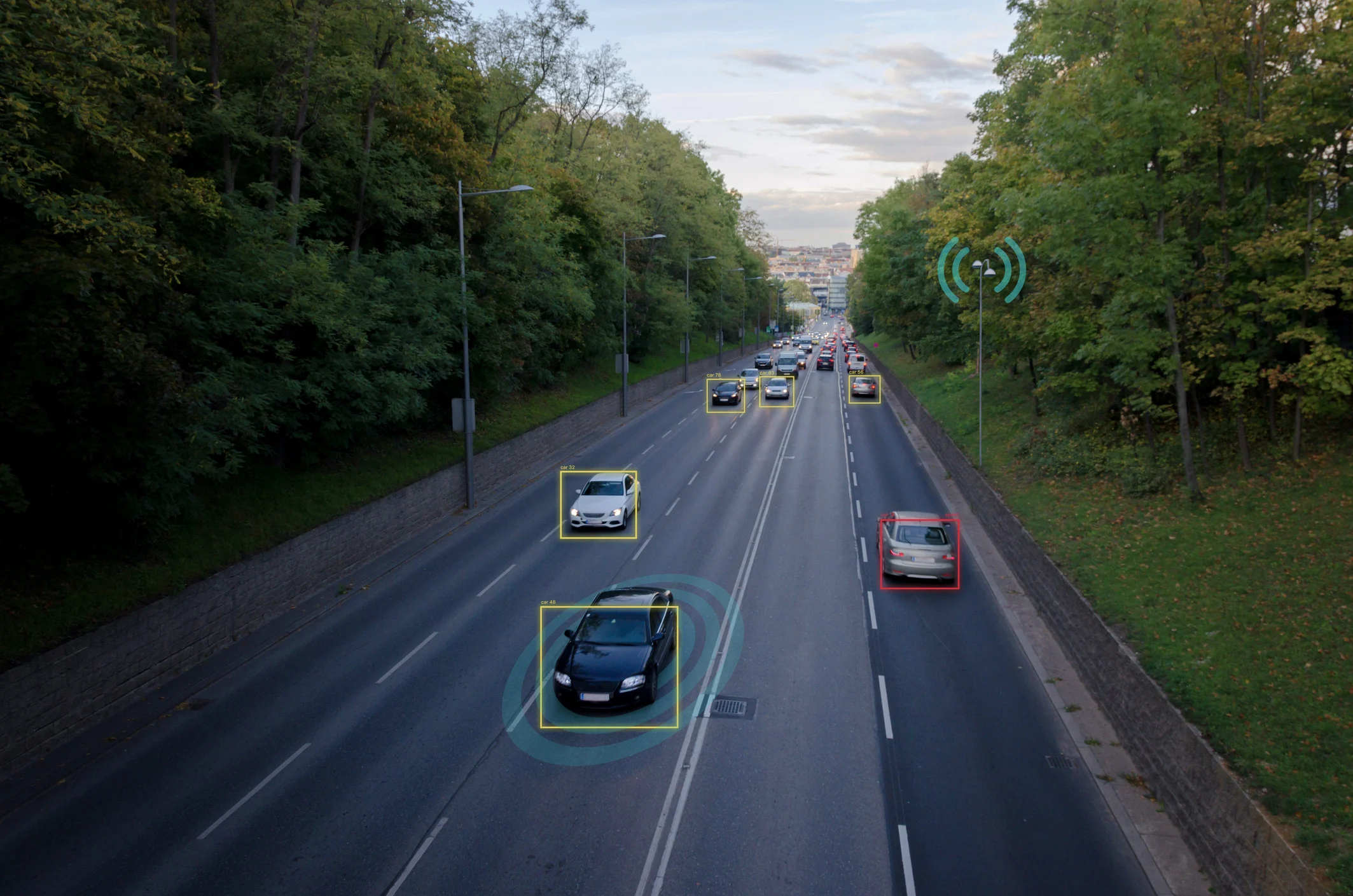
Camera-based driver assistance systems, such as lane keeping or traffic jam assistants, must evaluate video images in real-time and detect lanes, markings, vehicles, or pedestrians. The necessary algorithms were initially developed by the client’s experts as PC programs for research purposes. However, at the time of the project, the processing power of processors and graphics cards was insufficient to execute them in real-time on the video stream of an automotive camera. This meant that the functions could not be tested in moving test vehicles.
SCS’s Contribution
SCS ported the algorithms, which were available as PC programs, to an FPGA platform, enabling their real-time execution. Before each implementation, SCS, together with the client’s experts, examined the technical feasibility and the effort required for realization.
Result
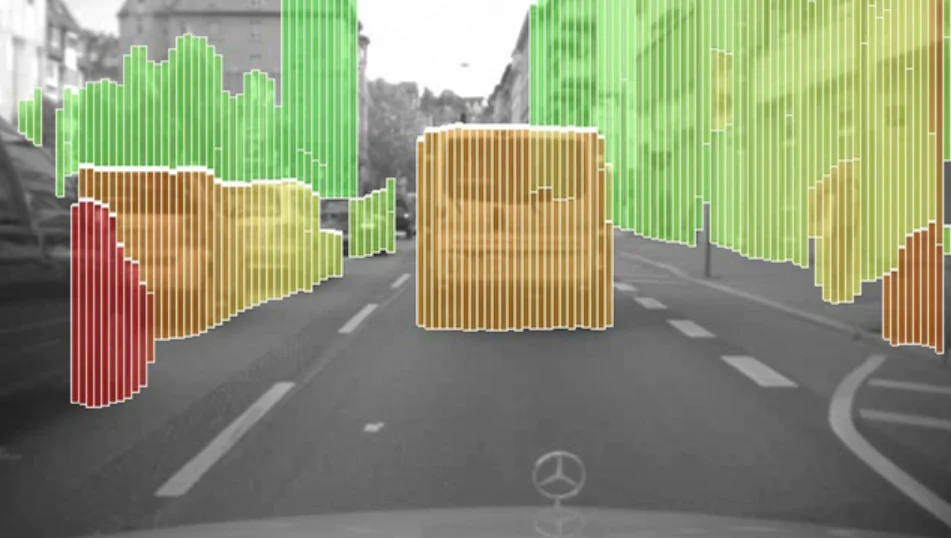
With the FPGA implementation, the client’s experts were able to execute their algorithms in real-time in the test vehicle, combine them into a complete system, and test them in real traffic. Two automotive cameras could be connected directly to the SCS FPGA box, and the results were available via the network connection for further processing. The SCS FPGA box was used as a subsystem of the Mercedes-Benz S-Class INTELLIGENT DRIVE. In 2013, the vehicle was the first in the world to autonomously complete a roughly 100-kilometer overland route, from Mannheim to Pforzheim, on the historic route of Bertha Benz.
approx. 100 km
autonomously completed overland route by the Mercedes-Benz S-Class INTELLIGENT DRIVE.
in series production
algorithms implemented by SCS on FPGA.